Monday, 23 January 2012
The Cotswold Way - Part II
Monday, 17 October 2011
Sometimes, It's Right on our Doorstep
Well, last Friday, I learned my lesson. I set off on what turned out today one of the finest days walking I have had in a very long time. It was no epic, there was no packraft, no rucksack stuffed with a month’s food or wading through thigh-deep swamp. The weather was glorious, my physical altitude peaked at around 320 metres, but my emotional altitude was way higher. So what did I do?
A little background information first. I moved up to Cheltenham, Glos., in 1996, and aside from a few years living in Ross-on-Wye after I got married that’s where home has remained. Cheltenham markets itself as “Centre for the Cotswolds”. Note the for in that slogan; it’s not in the Cotswolds, it’s on the edge, down on the Severn plain. Nonetheless, from my window as I type this I can see the Cotswolds. The escarpment arcs around the eastern edge of Cheltenham, so I can see Cleeve Hill to the north and follow the sweep that takes in Wistley, Leckhampton and Crickley Hills. I’ve strolled about on the their slopes, I have ground up and flown down their twisty trails on my mountain bike. But I have never viewed them as a destination for a hillwalking day. In fact the Cotswold Way has always struck me as a bit red-socked rambler, a bit “Country Walking”, a bit, dare I say it, Julia Bradbury...
Interestingly, as I have got older, I think I have become more prepared to reconsider my opinions. Naturally, we make decisions very quickly on what we see or hear, and we base our actions on those judgements. It is really important to remember that they are just that, snap judgements worthy of further, deeper consideration. And this is what happened with me and the Cotswold Way. Looking for a project to keep me occupied over the winter I thought why not do the Cotswold Way in stages. It passes no more than three kilometres from my house, it seems churlish to ignore a 105 mile long, waymarked trail that’s right on my doorstep. I bought the Harveys Cotswold Way map (also another first, having always been an OS loyalist) and looked over the route. Game on.
So this Friday just gone, Bev dropped me of in the middle of Chipping Campden at the northern end of the route. It’s a pretty little town, but I didn’t linger. I was heading for Winchcombe, 30 kilometres and a days walk south.
Something else that you cannot help but pick up on is the age of the landscape. When you walk the wild parts of Britain, very often it is easy to imagine that all human life has disappeared. Would that landscape look any different if that were the case? Not much. Yet the Cotswolds are different. They feel ancient. And there is a good reason why this is the case. They are ancient. A quick glance at an OS map shows earthworks, forts, barrows and settlements. Roman roads, villas and ruins dot the landscape (Bath, the terminus of the Cotswold Way is probably the most famous Roman site in Britain). That depth of history permeates you as you walk through the landscape. You seem to soak it up through your feet until you are brimming over with it. It’s hard to describe, it’s definitely worth experiencing.
The route is ridiculously well signposted. Every junction, or direction change either has a finger board pointing the way or a little yellow “Cotswold Way” (with acorn) confirming the route. On longer stretches through fields or woods where there is no direction change a wooden bollard guides you onwards. I only used my map to see how far away the next stop was, I don’t think I used it for route-finding the whole day. If visibility was really, really bad it might be an issue.
The paths when I walked this section were in very good condition. They were varied (narrow, wide, stony, smooth, grassy) but firm under foot and easy to follow generally. I imagine after rain or a prolonged wet spell that may not be the case, I know from experience that they can get very slippery. I suspect I will confirm that as I continue walking the route over the winter.
One thing that struck me was the fact that on a couple of occasions the route leads you off the high ground to run you through towns like Broadway and Winchcombe. This is handy if you need to re-supply or make use of a hostelry (more on that in a moment) but it feels a bit contrived. If you don’t need to visit them, then these towns can be bypassed and a more logical route picked, although I guess that means you are not walking the Cotswold Way proper.
If you’re backpacking, it should be possible to find a somewhere to pitch up, if you are sensible. The route passes through woods and spinneys, and quite a number of the fields are very rolling. A low-profile tent or tarp, in a muted colour, pitched late in the day could well go unnoticed.
Monday, 19 September 2011
Seven Of One, Half A Dozen Of The Other.
What camp do I fall in to?
Well, I'm 42, so I obviously fall in to the "Young Man" category. And I've never done the challenge, so I think I fall in to the "Apprehensive" section too. I am also going to fall in to the "Not Posting an Entry Form In" category.
It feels a bit strange, and final, to type those words. The decision not to enter next year's challenge has been both tough and simple to make. "Explain please" I hear you ask. I will.
It's tough because I love Scotland. I have not visited or walked there as often as I would like, and the Challenge seemed like a perfect opportunity to spend time in a wonderful environment. I have also come a bit late to the backpacking/wild camping aspect of enjoying the outdoors and a chance to test myself doing it is one I really wanted to take. Of course you can't discount the opportunity to by new, lighter, shinier kit, and this is a major driving force in too many of my hobbies. So many things in the Plus column...
If I love all these things so much, then why am I not entering? As I mentioned in a previous post, I really miss my wife when I'm away, and two weeks is just too long. Even if she came up and met me a couple of times I'm not sure that would help. I'm self-employed so we don't always find it easy to take weeks off for holidaying purposes, so for me to take two weeks off and spend it doing my own thing seems a bit selfish. That also links to one of the more mundane reasons to not enter: wonga. Taking two weeks off, during these straitened times, just isn't going to be practical. I thought I had made my mind up that I wasn't going to enter, then the entry form turns up and I go back to planning, thumbing through guidebooks and browsing blogs, but ultimately, in my heart of hearts I just knew it wasn't going to happen.
So where does that leave me, in the hiking/backpacking scheme of things? Is this The End of my backpacking dream? Well, no. I need something to aim for, some reason to keep my fitness levels up over the winter, some excuse to buy that vital titanium-carbon fibre aglet, and some challenge to look forward to. So, to that end, I have been casting about for something to do, and I have found it. I won't go in to details here just yet, but suffice to say, I'll be away from home for just four nights, I'll miss only three days work, I'll walk 100 kilometres and climb over 7400m. Maps have been bought and routes plotted on Grough, Chris and Pete have expressed their interest in joining me, so wheels are creaking in to motion.
So there it is, I am genuinely sad that I won't be entering the Challenge next year (although never say never). However, deep down, I know it's the right thing to do.
(Of course not entering does make a mockery of my site's address, and my Twitter handle, @KenTGOC2012, but I'm hoping you'll all just over look that...)
Wednesday, 24 August 2011
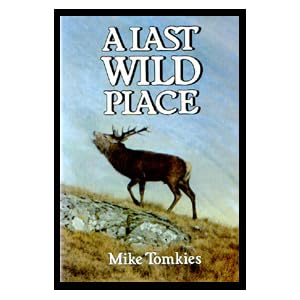
A Last Wild Place
"In Nature's teeming world the animals and birds are working hard to fulfil their destinies. The feeling came strongly upon me that we, who evolved from original creation to become the dominant species, with unique gifts of intelligence, foresight and the ability to love spiritually beyond ourselves, have an inherent and inescapable duty to act as repsonsible custodians of the whole inspiring natural world. We are the late-comers, it can only be ours on trust.
If we let it down then we also let down its creator; and if even if we don't believe in God, conservation of the natural world and its ability to inspire our finer thoughts - for only thought can change the world - is without any doubt whatever a necessary ethic for our own survival. The kingdoms of the wild evolved in creation not for mere man to plunder, to satisfy greed under the guide of progress, and to finally destroy, but both to enjoy and enhance. If we fail to learn from the last wild places we may yet create a hell on earth before we too pass along the road to extinction, the fate of all dominant species before us. Spiritual unease has long been mainfest. The lessons will not wait for ever to be learned."
Whilst we may have differing philosophies, I think the sentiment contained in these words is one most people will agree with.
If you want to read the book, then I suggest checking out Amazon.
Tuesday, 23 August 2011
POE Peak Elite AC Blues
After a quick email to Bob and Rose at BPL, I had a new one. Which has now developed a leak after four nights use. A further "bath" test has not revealed where the leak is coming from, but there is definitely one somewhere. Searching round the internet it did not take long to discover that I was not the only person to have experienced this problem. For example, Mark's Walking Blog details his experiences. I emailed BPL and got a reply from Bob, who was most sympathetic, having had the same problem on the first day of his TGO Challenge this year! Four nights sleeping on two sit mats does not sound like a great start to a 200 mile hike. Bob has offered a refund, replacement with the 3/4 length POE Peak Elite AC, or change to TAR NeoAir. I'm not sure which option to take. So here's my appeal to the outdoor blogosphere: help! Any suggestions or recommendations are gratefully received.
Things to bear in mind: I already have a couple of thermarests (prolite and standard), so I can't really justify having loads more mats, so this one will have to be it. I don't want to spend a tonne more money. Pack-size and weight are important, but comfort and reliability more so.
Here's a list of some of the contenders that I'm considering:
POE Peak Elite AC, 51x183cm, 396g, R2.5, £69.99 (my leaky one weighs 354g with stuffsac and repair kit)
TAR NeoAir, 51x183cm, 410g, R2.5, £94.99
Exped SynMat UL, 52x183cm, 460g, -4c, £67.50
Kooka Bay LuxLite, 51x183cm, R1, £55 (Not sure how easy this is to get hold of, and the price excludes shipping and taxes)
Alpkit Numo, 49x180cm, 468g, R2.5, £40 (out of Stock currently)
It's hard to see past the Exped although it is heavier than I would like, particularly compared to the Peak Elite. Anyway, over to you!
*** UPDATE UPDATE UPDATE *** 29 August 2011
Well, I went with the NeoAir in the end. I really liked the look of the Exped SynMat UL, but there appears to be no stock in the country and won't be until mid-October. So I popped over to Malvern to see Bob and Rose at BPL and swapped the Peak Elite for a NeoAir. Excellent service as always from BPL, thoroughly recommended.
Initial thoughts on the NeoAir? I think it is a little bulkier than the Peak Elite, but not awkwardly so. It feels very comfortable, comes with a stuff sac and patch kit, and seems well made. Maybe a little run out next month to test it in the wild..?
|
|
|
|
|
|
|
|
|
|
|
|
|
|
|
|
|
|
|
|
|
|
|
|
|
|
|
|
|
|
|
|
|
|
|
|
|
|
|
|
|
|
|
|
|
|
|
|
|
Thursday, 28 July 2011
A Day on The Black Mountain
It was a fairly straightforward route, up the escarpment edge of Fan Hir to Fan Brycheiniog, then west along the edge to Bannau Sir Gaer, down to the Llyn Y Fan Fach and back to the start underneath the cliffs I'd previously been on top of.
It is a stunning place.
View from Fan Hir
Llyn Y Fan Fawr
Picws Du
Llyn Y Fan Fach
Bannau Sir Gaer
Llyn Y Fan Fach
Below Bwlch Blaen Twrch
Fan HirTuesday, 12 July 2011
I Like The Phrase "Neolithic Hippy"
Are they the right solution for renewable energy? Should they be stuck up all over the beautiful, wild parts of the country? How can I get a slice of the enormous pie? (I’m back to wind farms here, not titanium underpants.) All good questions, none of which it is my intention to answer here. Thinking about it, I may come back to the second one, we’ll see.
No, actually what I was going to muse over was the human impact on wild landscape generally. This was triggered in part by my walk in the Cairngorms but also by a number of things I have read recently. We like to immerse ourselves in wild places, to camp, walk, sit in these places and soak up their unspoilt beauty. When we’re not out there we like to talk about our experiences and to read those of others, to pore over photographs and maps, to plot and plan our next escape. Yet how many of the places we go to are as unspoilt as we think?
I found it surprising when I was in the Cairngorms (a National Park) at just how obvious the hand of man was on the landscape. Chris and I walked to Derry Lodge up a wide, well surfaced track. When we arrived we found four buildings (the Bob Scott Memorial Hut, the lodge buildings and the mountain rescue post). To get over the rivers there were bridges. Heading north we found fenced off areas of trees, and then the Refuge of Avon. Once we reached Faindouran Lodge (two buildings) we picked up another wide vehicle track. In places, where there presumably had been a need for gravel to level the track, great scoops had been taken out of the hillsides, which now were eroding away. We passed more lodges, tracks, bothies and bridges, and a truly spectacular mess of rock, pipes and tracks where the Allt an Laoigh joins the Avon. Then when you look up, many of the hills are zebra-striped with controlled heather burns. Certainly not unspoilt! Travel to other mountainous areas of the British Isles and if it’s not bothies and bridges then it’s sheep grazing, hydro schemes and hard surfaced paths to the summits of popular and convenient peaks.
Screen grab from Google Maps showing the pattern of heather burns north of Braemar.
I’m not knocking these things, the tracks, bridges and lodges made our journey much easier than it would have been without them. The heather burns and other landscape management are vital, so we’re told, for the ecology and economy of the area. But what struck me then, and has been emphasised since in my reading, is that these are simply the latest in a long list of landscape exploitation.
I found a copy of “The Shell Guide to Reading The Landscape” by Richard Muir, which is a fascinating and comprehensive discussion of human interaction with the British countryside. One of the points he makes early on is that the deforestation of the British Isles commenced in Neolithic times (2500 B.C.E.) and large inroads were made in to the blanket coverage of woodland that existed prior to that. I’m picturing in my head some sort of Neolithic Hippy, railing at the axe-wielding proponents of “advancement” as they levelled great swathes of the forest. Richard Muir suggests that by the time the Romans rocked up, they would have found England a land largely cleared of forest, with pockets of tended woodland. Interesting, I thought. In his “A History of Scotland” Neil Oliver describes the move to farming in the Highlands (4000 B.C.E?) which resulted in forests being thinned and eventually cleared. One final reference that I recently came across is found in Hamish Brown’s “Hamish’s Mountain Walk”. In the chapter “Fada-Fannich” he mentions the much later ironworks at Letterewe. Local oaks were felled to feed the furnaces, seven of which were burning at one point in history. How much fuel would an iron smelting furnace require a year? Hamish says that each one would consume 120 acres of Oak woodland in twelve months!
This leads me to the following, two part, conclusion. One: that the landscape we consider to wild, unspoilt, inspiring is largely that way because it’s been exploited like mad, then managed, then exploited, etc., etc. And the other point is that when “progress” or financial gain is involved it’s very difficult to stop people taking what they want from the landscape, with little or no thought for the long-term consequences. They’ve been doing it for 4000 years!
Rather than end on that depressing note, I think in some ways it should increase our resolve and determination to get out and joy the sights, sounds and smells of the hills, to appreciate what we’ve got, and perhaps to think about why it’s the way it is.
Tuesday, 5 July 2011
Thoughts on the TGO Challenge, and If It's For Me.
Firstly, I think I'll talk about the Physical Aspects of our hike. I deliberately chose a route that wouldn't provide too much agro from a navigational point of view. Up one valley, along another and then south crossing from one valley to another. Land Rover tracks, stalkers paths with the odd bit of heather/bog trotting. So that wasn't too much of a problem. I did also want to see how we would cope with a long day, carrying hefty loads, and that definitely was a tougher proposition for us. The second day was quite committing as we had no shortcut back to anywhere if we found the going too much, so we really had to dig deep mid-afternoon. I think we both felt a little unsure about our ability to do those sort of distances for ten or twelve days running. One other aspect that would need to be honed is campcraft. I am pretty confident that, like anything, the more you do it the easier it becomes. Backpacking skills are a whole level (or two!) up from your usual dayhiking skillset, and getting them dialled makes the whole thing easier, safer and way more enjoyable, I imagine! We did ok, but I think a "smooth and by the numbers" routine when making/breaking camp is something we do well to aspire to. I suppose kit comes in to the "physical" side of things too, and overall I was pleased with how things worked. I need to practice rigging the Trailstar, and I need to cut down on weight which I think would be in three areas: clothing, food and paunch.
Then there were the Mental Issues. Hmmm, that doesn't look good! One of the biggest things that both Chris and I struggled with was the absence of wives. I know loads of people like getting away from their respective spouses/partners, but we were not of that type. Ensconced under flapping silnylon at Derry Lodge we both confessed, like the old soppies we are, that we missed our wives. And this feeling didn't go away. We were just as bad the next day. And the day after that. I'm not sure how you get round that, or indeed why you would want to. Unfortunately, neither of our girls has the health to join in on a 180 mile hike so this could be a challenge-buster, as I don't think we've got it in us to wave them off for the best part of two weeks. Another issue that raised it's head was that of the very nature of the TGO Challenge itself. We found at times that we were just head down, ploughing on for the next break or campsite and not really enjoying the experience of being where we were. Is a linear, timed (after a fashion) hike the right sort of event for us? Would we rather be a little freer in our scheduling, stopping where we want, exploring where we fancy, rather than grinding the clicks out? Especially when the last few days seem to be mainly an uninspiring trudge through the eastern flatlands (no offence meant to anyone who likes that bit of the walk, or indeed lives there)? I recall Cameron McNeish describing his feelings of unease as he headed away from the hills when he wrote about his first Challenge in TGO last year, and I can certainly understand them. West is best!
So questions to be answered:
1. Is our navigation up to the job? Pick the route according to you ability, do a course, practice, practice, practice.
2. Are our fitness levels were they need to be? Walk, diet, hike: simples.
3. Campcraft? Nothing beats getting out there and doing it I guess!
4. Kit-wise, some weighing and judicious choosing should get things a little closer to where they need to be.
5. Can we be wife-free for two weeks? I don't know, but I think not...
6. Do I actually want to do the TGO Challenge? Yes, and No. I love the idea of it, I love the wilds of Scotland, I love the idea of digging deep when things go pear-shaped, but I don't know if I love the idea of forcing those things to fit an organised, however loosely, event.
(To be frank, the first four questions can be answered fairly easily, I think it's the last two that are the clinchers...)
Please don't take this post the wrong way. I really enjoyed the experience I had seven weeks ago, and I completely understand why people come from across the globe, year after year, to be part of the TGO Challenge. I am constantly inspired by the blogs, photos and articles that Challengers post. As I type this I really feel the need to get out in the boonies somewhere and pitch up. I've got the gear, I've got some idea, and I definitely love the experience. The question is, do I want that experience to be on the TGO?
I guess only I can answer that.
P.S. If you haven't had the chance to read Chris' view of our hike then you could do worse than go here.
Sunday, 29 May 2011
One Seventh of a Challenge.
I realise that there will be a deluge (that seemed like the appropriate word given the conditions) of blogs and accounts from 2011 Challengers, so this is simply my observations of our three days in the Cairngorms, with thoughts and comments on the kit I took and used, and also some of the questions raised by our experiences.
First Up, What We Did
It was an early start for us on Thursday. Our plan was to camp at Derry Lodge, so to get to Braemar (from Cheltenham) with sufficient time to then hike on up in to the hills meant leaving the house at ten to six in the morning. With just a couple of stops en route to fill up (and empty out) we made really good time, rolling in to Braemar at about half two. After a quick peruse in Braemar Mountain Sports, and an all importantt refresher in the Fife Arms, my other half dropped us off at Victoria Bridge, by Mar Lodge. She was going to spend a pleasant few days exploring the area and recovering in the bar at the Fife Arms. Clever!
Chris and I shouldered (with some difficulty) our loads and set off. Across the Dee and then onwards toward Glen Lui via Doire Bhraghad. We made steady progress, periodically stopping to "ooh" and "aah" at the vista as we climber higher. After a couple of hours the bothy at Derry Lodge hoved in to view. We pressed on a little further towards the Lodge where we intended to pitch the Trailstar for the night. After dithering about trying to find a spot out of the wind (good luck with that), we eventually settled on a spot on the southern side of the wood, close to Lui Water. Once we settled we had a little stroll around the area, which by now had become a pretty well populated bit of the wild. I counted ten tents/bivys/tarps, ranging from Argos specials to a Henry Shires Scarp1, and everything in between. After taking care of necessary business, it was time to hit the hay (or air, as I was using my shiny new POE Elite AC).
After a blustery, showery night, it was soon time to load up and get on our way. Fighting the wind and the squally rain, we breakfasted, stowed our gear and set off up Glen Derry. All the high slopes around had a light frosting of fresh snow, and menacing grey clouds kept boiling up to the west. Within thirty minutes however we were peeling of our waterproof layers.
The sun was breaking through, the rain had gone and suddenly we were walking under blue skies. And what a fantastic place to be walking! The open woodland soon gave way to the magnificent upper Glen Derry.

Passing one brave camper, who commented on the wild night we soon had the place to ourselves.
We squelched upwards towards Lairig an Laoigh. Which we thought was awesome.
The sub-Alpine feel was very different from any of our usual walking areas. Dubh Lochan looked stunning, dark blue against the drab browns of the surrounding heather.
Feeling a little weary after the up and over, and then the plod through what at one point was path and then became stream before becoming path again, we headed for the Fords of Avon Refuge.
After refuelling out of the wind we had a decision to make. Our plan was to head down Glen Avon but we were aware that this was quite committing. There was no shortcut back to Braemar if we found things too tough, it was all the way along to Linn of Avon before we could head south. Were we men or mice (eep!)? MEN! So off we went.
The first four or five kilometres were pretty unpleasant, the path was wet, boggy, meandering, and in places almost invisible. Finally the track improved just before Faindouran Lodge where we gratefully took the weight off our feet, and had another break out of the unrelenting wind.
The next section of the track was good underfoot, and the scenery was stunning. It was very easy to put your head down and get the ks under your belt and actually forget where you were, and why you were there.
Looking south we could see the north western slopes of Ben Avon, which was awe-inspiring. Anywho, we pressed on, finally reaching Linn of Avon.
We decided to head south alongside Glen Builg for a couple of kilometres before pitching camp. Finally, we gratefully shrugged off our sacks and flopped to the grass.
Again the wind made setting up the Trailstar tricky but finally we had somewhere to lay our heads. After a very quick and invigorating wash in the burn, it was again time to crawl in to my sleeping bag. It must have been all of 8 o'clock. Rock and Roll! The wind howled for most of the night, roaring over the tops of the surrounding ridges. At times it sounded like a plane flying overhead, before fading away to nothing, and then roaring back in again. Tiredness soon won, and some sleep was snatched...
The next day dawned bright, although still very windy. Cold in the shade of the surrounding slopes we quickly ate and packed and were under way by 7:30. Heading south we soon reached the end of the good track, and picked our way along the eastern shore of Loch Builg on what was basically a stream. As we wove our way through the lochans at the southern end of the loch I commented to Chris that I was a little disappointed by the low wildlife count of our foray in to the Cairngorms. A couple of interesting black and white birds the day before and a herd of deer watching our last camp were about it. No sooner was Chris agreeing then we heard a squawky commotion from the adjacent lochan followed by the magnificent sight of an enormous eagle taking flight. It drifted over the brow of the slope and out of sight. We apparently startled its attack on some moorhenny-type things and their little moorhenlings. We weren't sure what we had just seen; was it a Golden Eagle, or just a regular Big Old Eagle. (We have both done some research since our return, and based on its size big), colouring (dark with lighter tail and wing patches) and distribution (the Cairngorms) we think it was a Golden Eagle although we stand to be corrected by anyone who has more of an idea about birds!)
After this high, we then had a bit of a low. We headed south west alongside the River Gairn, and it was hard work. We were walking in to the wind, the cloud was closing in and we tried to follow a track that seemed not to exist on the ground to avoid the climb on to the western flank of Culardoch. After a lot of heather stomping and bog trotting (enlivened only by Chris' encounter with a nest of grouslings) we emerged on to the track above Bealach Dearg, where we also ran in to all the wind. My life, what a struggle to keep balanced when you're carrying a big pack in 40m.p.h. winds. Taking shelter in a grouse butt (that sounds wrong, and awkward) at the top, we took a deep breath, girded our loins and set off in to the wind. Gradually losing height, and dropping down in to the forest above Invercauld House, meant the walking became much easier, and a whole load more pleasant.
Now came the lowest point. At Invercauld House, Braemar is no more than a couple of kilometres west, but there's no bridge. So we had to walk east for two clicks before crossing the Dee and then walking back along the A93. At this point our feet, which had coped with the last 50 kilometres with no worries, really started playing up. After a stop for a quick Compeed, we headed on, reduced to thumbing for a lift that never came! Eventually Braemar Castle came in to view, followed shortly after by the outliers of Braemar. Before we knew it we were slumped in the Fife Arms with a beer and a packet of crisps. Bev turned up shortly afterwards, and we regaled her with the tales of our epic adventure.
Our original plan had been to camp in Braemar on the Saturday night, but in light of our weariness and the weather, we decided to seek more pleasant lodgings. No rooms in the Fife Arms (full of challengers, apparently) saw our hearts sink, but not for long, as we scored a twin room in Craiglea. I can thoroughly recommend this establishment, friendly proprietors, clean and comfortable rooms, decent shower, and a great breakfast. Oh yeah and for only £33 a head. After showering and then watching Moonraker we returned to Bev in the Fife Arms where we had further beer and more food. Another earlyish night saw us stumble wearily back up to Craiglea.
After a hearty cooked breakfast the following morning, we were on our way home by 9:15, and after a couple of stops back home by half five that evening. Tired, but happy.
What I Used, and What I Thought Of It
A lot of the gear I took was new to me and this was the first time it had been used in anger, so here's how it did.
GoLite Pinnacle: Loved this, light, spacious, plenty of auxillary storage. The one thing I struggled with was the infinite amount of adjustment with the straps etc. I jigged it around for a while and then got it comfy, I would say that it would be nice if it came with some more comprehensive fitting instructions.
Alpkit Pipedream 400: Great. Small pack size, warm, happy me!
Alpkit Hunka bivy: Simple, effective, not bad for £35!
Pacific Outdoor Equipment Peak Elite AC sleeping mat: Brilliant! I think that of all the gear I was using, this was the best. It packs down really small, it's super-comfy and kept me warm too. I don't think it's possible to praise this enough!
Mountain Laurel Design Trailstar: Another great thing. Light, simple to set up, tonnes of room. I would say that we did struggle on the second night where the wind was quite swirly. It seemed to catch under the opening during the night. With two of us, there was ample room, for one there would be almost too much space!
Inov-8 Terroc 330s: These rival the Peak Elite AC as my favourite bit of kit. I wore Icebreaker Merino socks with them. On the long day from Derry Lodge to Glen Buigh my feet got pretty wet (soaked) yet were comfortable and never got cold. I felt that I walked much more easily, in my Scarpa boots I feel a bit detached from the terrain. I am a convert to these shoes, brilliant! The only time they started to chafe was the 7 or 8 km road walk in to Braemar.
Questions, Questions...
This little foray has raised some questions which i think may be the makings of another blog post, so stay tuned...